

3M SANDING BELTS · METALWORKING
3M Sanding Belts for Stock Removal, Fine Grinding and Finishing
3M sanding belts differ in grinding task, abrasive structure and backing. Start with the material and desired surface: Cubitron for stock removal, Trizact for a defined finish and nonwoven belts for surface finishing.
01
Belt families
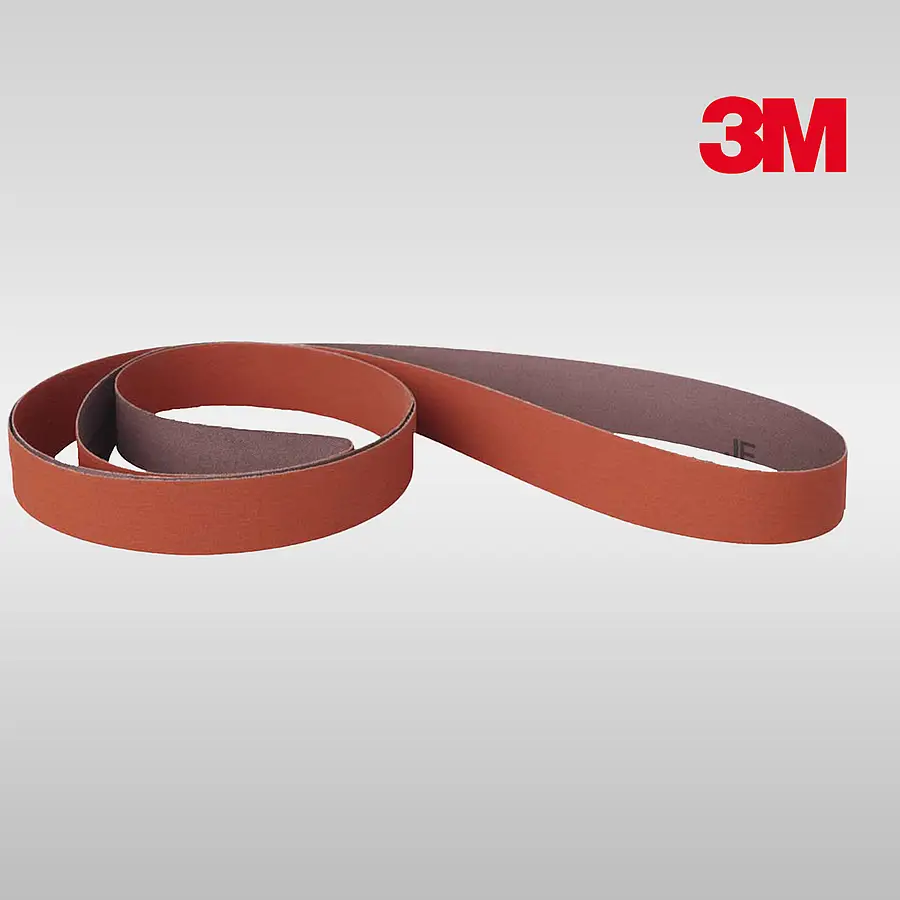
Cubitron abrasive belts
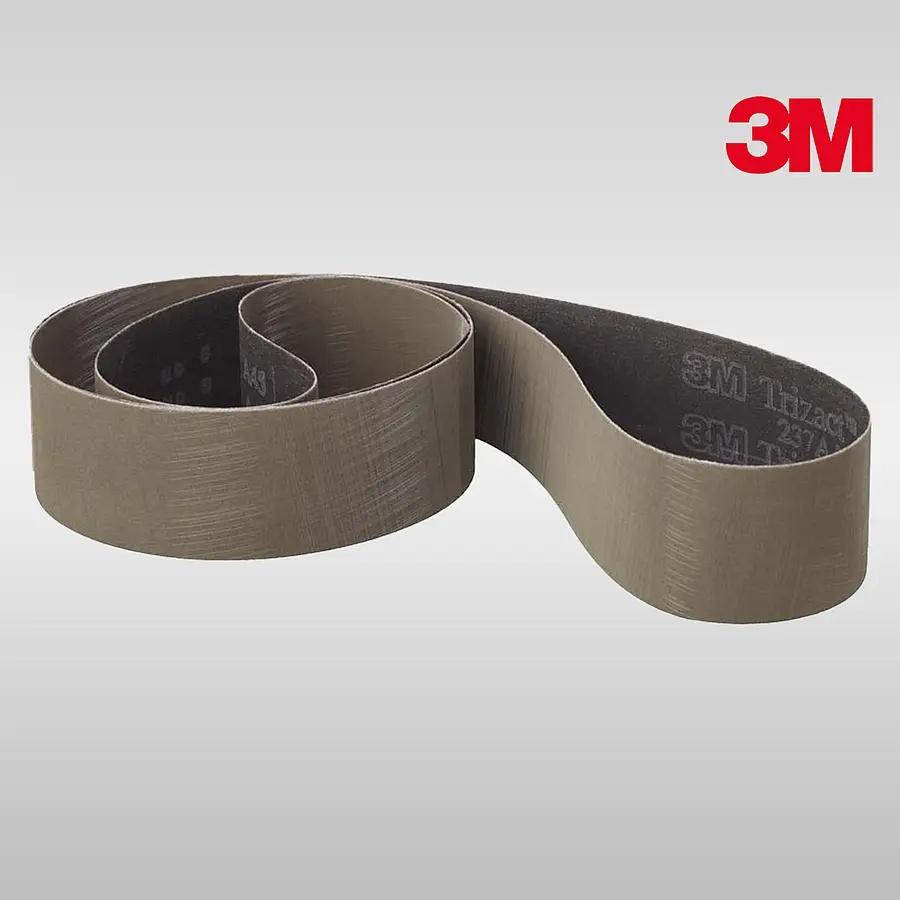
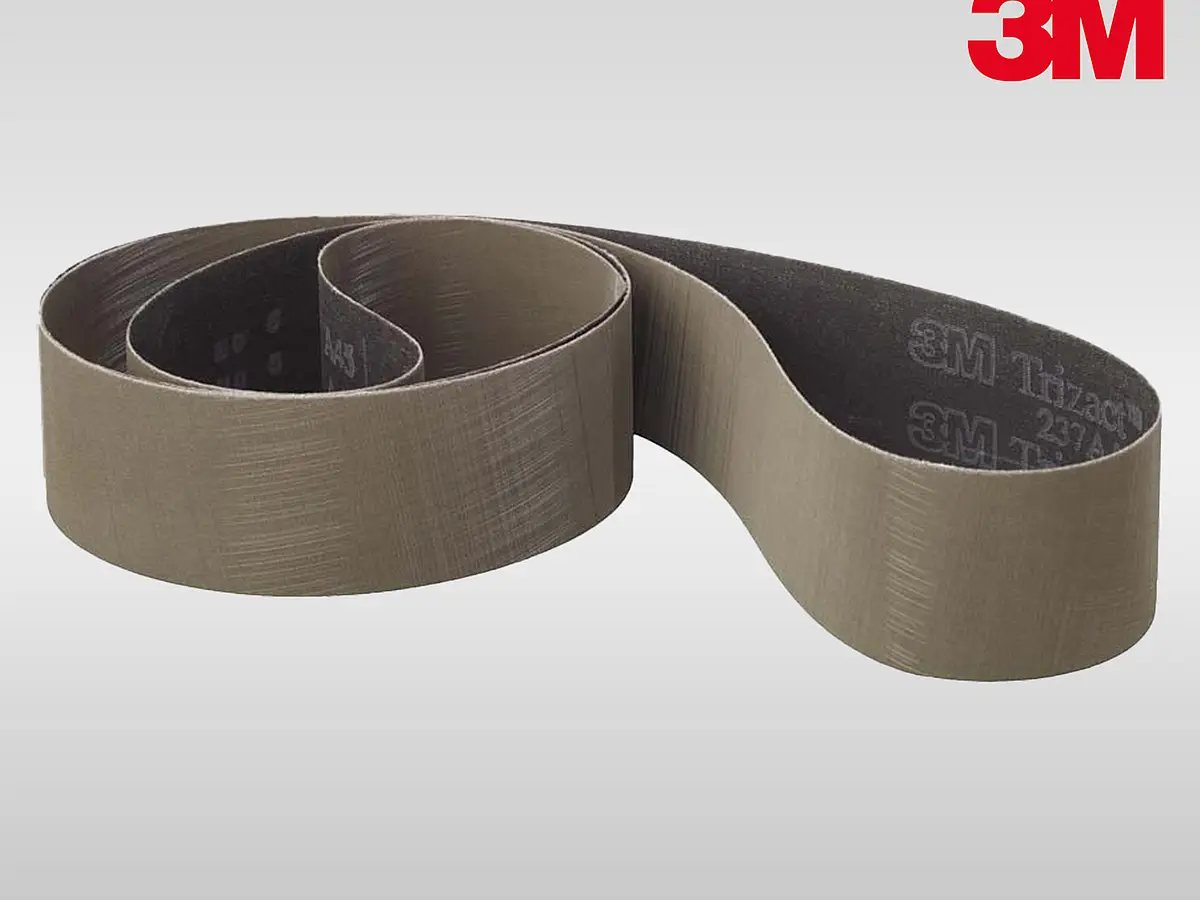
Trizact abrasive belts
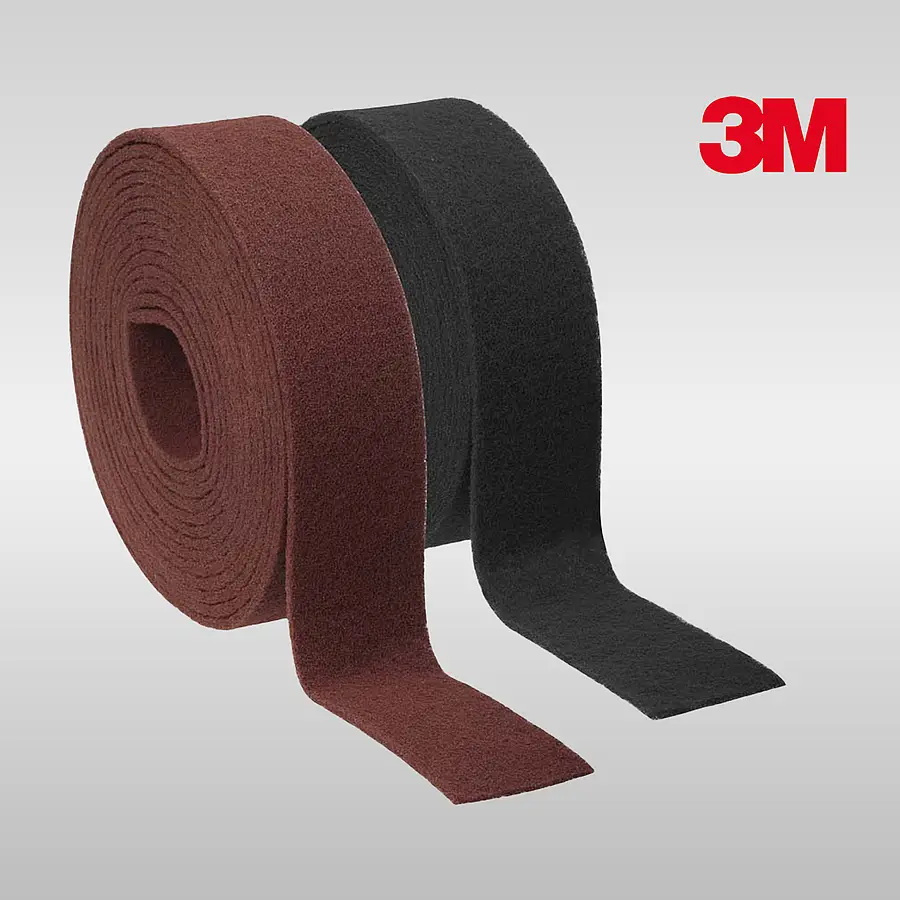
3M nonwoven belts
02
Selection criteria
Which 3M sanding belt suits your task?
Start with the workpiece material, its initial condition and the target surface: do you need stock removal, contour grinding or refinement of an existing scratch pattern? Cubitron II 947A uses precision-shaped ceramic grain for stock removal; flexible 707E combines a Cubitron/aluminium oxide blend with J-weight cloth for contours. Trizact uses structured abrasive layers for a consistent finish. Nonwoven belts are a separate option for fine finishing and blending.
Then check belt width and length against the machine, backing flexibility, grit system and contact pressure. The belt you currently use is a useful starting point, but the workpiece, result and process determine whether that specification still fits.
03
3M SANDING BELT RANGE
3M sanding belts in the range
The system listing shows assigned 3M sanding belts. Compare product versions by grain, backing and belt size; we can review their suitability for your process with you.
No products found
No products are currently listed in this category. Request a call back and we will help you find the right product.
Request a callback04
3M SANDING BELT SELECTION
From your current belt to a suitable specification
If belt life, stock removal or the finish falls short of your target, compare more than product names. Trizact uses its own “A” grit system; the plus grade on precision-shaped Cubitron II grain is not simply a P grade. Check the specific product instead of equating the numbers directly. The flexible J-weight backing of 707E supports contours, while the X-weight backing of Cubitron II 947A is designed for different loads.
For a converted belt, tell us the material, current product, machine, belt size, process step and desired surface. For suitable coated abrasives, Krückemeyer GmbH checks the belt specification and splice for your application. For other manufacturers' cloth belts, see cloth sanding belts.
05
QUESTIONS ABOUT 3M SANDING BELTS
How do Cubitron, Trizact and 3M nonwoven belts differ?
Cubitron and Cubitron II belts are used for grinding tasks that require stock removal; the exact grain and backing depend on the product. Trizact belts have structured abrasive layers that expose fresh particles during use and support a consistent surface finish. 3M nonwoven belts use an open fibre structure for blending, fine finishing and surface finishing. Choose according to the starting condition, material and desired result. A nonwoven belt does not automatically replace a stock-removal step with a cloth sanding belt.
Can I compare P, A and plus grit grades directly?
No. P grades, Trizact A grades and the plus designation for precision-shaped Cubitron II grain belong to different systems. 3M documents assign plus grades empirically to familiar grit ranges; this does not establish general equivalence of the resulting finishes. Compare the specific product specification and test the result on the workpiece. Backing, pressure and the process target matter alongside the number printed on the belt.
What information helps select a suitable 3M sanding belt?
Provide the material and workpiece geometry, its condition before grinding, the required stock removal or target finish, and the machine in use. Belt width and length must fit the machine. The product currently used and the specific issue—such as low stock removal, an unsuitable scratch pattern or short belt life—also help. These details support a technical shortlist; suitability must be checked under the actual operating conditions.
How is a 3M sanding belt converted for my machine?
For suitable coated abrasives, Krückemeyer GmbH checks belt size, running direction and splice against the material and machine. The confirmed manufacturing range for sanding belts is 6–610 mm in width and 283–16,500 mm in length; the extremes cannot be combined arbitrarily. The splice is matched to the specification, and tensile strength is checked on samples from each batch. Tell us the source product and machine details so feasibility can be reviewed for your application.
06
Request advice
Tell us about the material, machine, belt you currently use and the finish you want. We can review the suitable 3M specification and, for appropriate coated abrasives, the possible conversion.
Select a 3M sanding belt for your application
Would you like to align stock removal, belt life or finish with your task? Send us your requirements so we can discuss the product specification and belt size.

ABRASIVES ADVICE
Jürgen Müller
Contact for products
Jürgen Müller can discuss your material, target finish, machine and suitable belt specification with you.