

3M TRIZACT · ABRASIVE BELTS
Trizact abrasive belts for metalworking
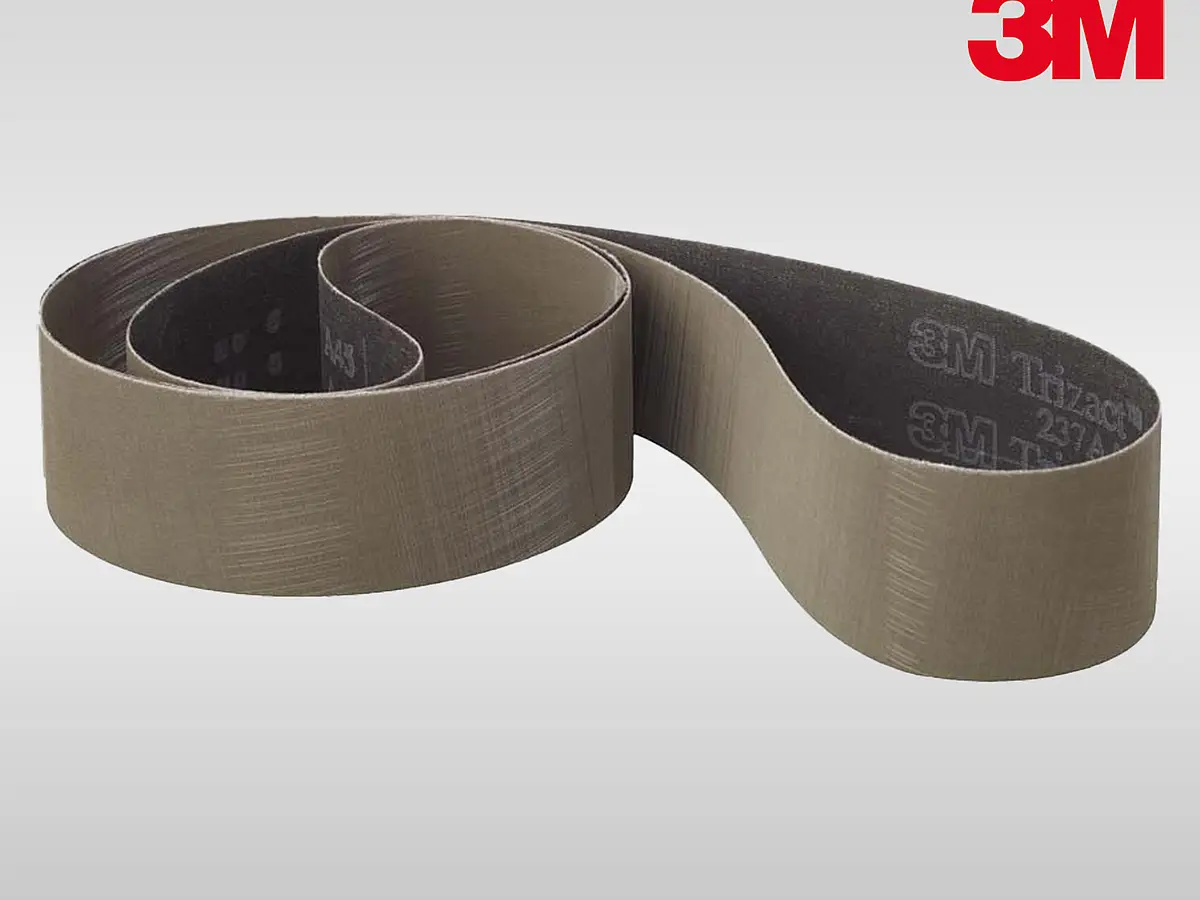
Trizact abrasive belts are structured coated abrasives designed for consistent stock removal and a reproducible finish. The right belt depends on the material, target surface, backing and grinding process.
01
Selection criteria
Choose a Trizact belt by finish and process
Start with the workpiece and target surface: which material is being processed, what is its condition before grinding, and which finish is required? Then check belt type, backing, grade system and the operating conditions of your machine. The flexible 217EA is described for contoured workpieces and low grinding pressure; 347FC uses a more robust, flexible X-weight cloth backing for high-alloy metals. Choose Trizact A grades for the specific product; do not equate them with conventional P grades without checking the application.
02
TRIZACT ABRASIVE BELTS
Trizact abrasive belts in the range
The listing shows Trizact abrasive belts from the 3M range. Compare the specific product family, backing and configuration for your processing step.
No products found
No products are currently listed in this category. Request a call back and we will help you find the right product.
Request a callback03
SELECTION AFTER THE LISTING
Which Trizact configuration suits your surface?
A reliable finish depends on more than the belt name. 217EA and 307EA use flexible J-weight backing and pyramidal abrasive structures; 347FC uses abrasive blocks on X-weight cloth. For 253FA, the catalogue specifies water-resistant XF polyester backing for wet applications on steel and stainless steel. Clarify the preceding grinding step, required surface appearance, contact pressure, wet or dry process, and the width and length of the existing belt. If a different supplied form is needed, we assess the base material and belt joint for the individual application; confirmed manufacturing ranges do not apply to every material combination.
If the current belt wears too quickly or the finish varies, tell us which product you use and what deviation you observe. This gives us a sound starting point for checking a suitable configuration.
04
QUESTIONS ABOUT TRIZACT BELTS
How do Trizact abrasive belts differ from conventional abrasive belts?
Trizact abrasive belts use a defined three-dimensional abrasive structure. In 217EA and 307EA, aluminium oxide particles form pyramidal structures on flexible J-weight backing; 347FC has an abrasive block structure on X-weight cloth. As the structures wear, fresh abrasive layers are exposed. This supports consistent stock removal and a reproducible finish. The right configuration still depends on the material, initial surface, desired result and process conditions. A conventional belt is therefore not automatically interchangeable.
When is a flexible Trizact belt useful for contoured parts?
The flexible J-weight backings of 217EA and 307EA can be useful for contoured workpieces. The manufacturer describes their ability to follow profiles and their use after a preceding grinding step; low grinding pressure is also recommended for 217EA. Whether these properties produce the required finish on your part also depends on the contact area, machine and previous grinding operation. Provide the component geometry and target surface appearance when asking us to assess a belt.
Which Trizact abrasive belts are suitable for wet processing?
The product catalogue describes 253FA with water-resistant XF polyester backing for wet applications on steel and stainless steel. Entries for 363FC also mention wet processing. This does not establish that every Trizact abrasive belt is suitable for every wet process. Check the specific product variant, fluid, material and machine. The grade, belt dimensions and required finish are also needed to choose a suitable configuration.
What details are needed for a converted Trizact abrasive belt?
Tell us which belt you currently use, the material, its initial condition and the desired surface, as well as the required belt width and length. The machine, contact area and wet or dry operating conditions also help with selection. Krückemeyer GmbH converts suitable coated abrasives into abrasive belts; the joint and dimensions must suit the base material and application. Confirmed manufacturing ranges describe a capability, not a commitment for every combination. We assess your specific requirement.
05
Request advice
Describe the material, initial surface, target finish, machine and abrasive belt currently in use. We can then assess the appropriate Trizact configuration and belt conversion.
Assess a Trizact belt for your application
Send us your processing task and required belt dimensions. We will review the configuration against the material, surface and process.

ABRASIVE TECHNOLOGY · TRIZACT
Jürgen Müller
Contact for products
Discuss the material, finish and current abrasive belt with Jürgen Müller so we can assess a suitable configuration.