

KLINGSPOR COATED ABRASIVES
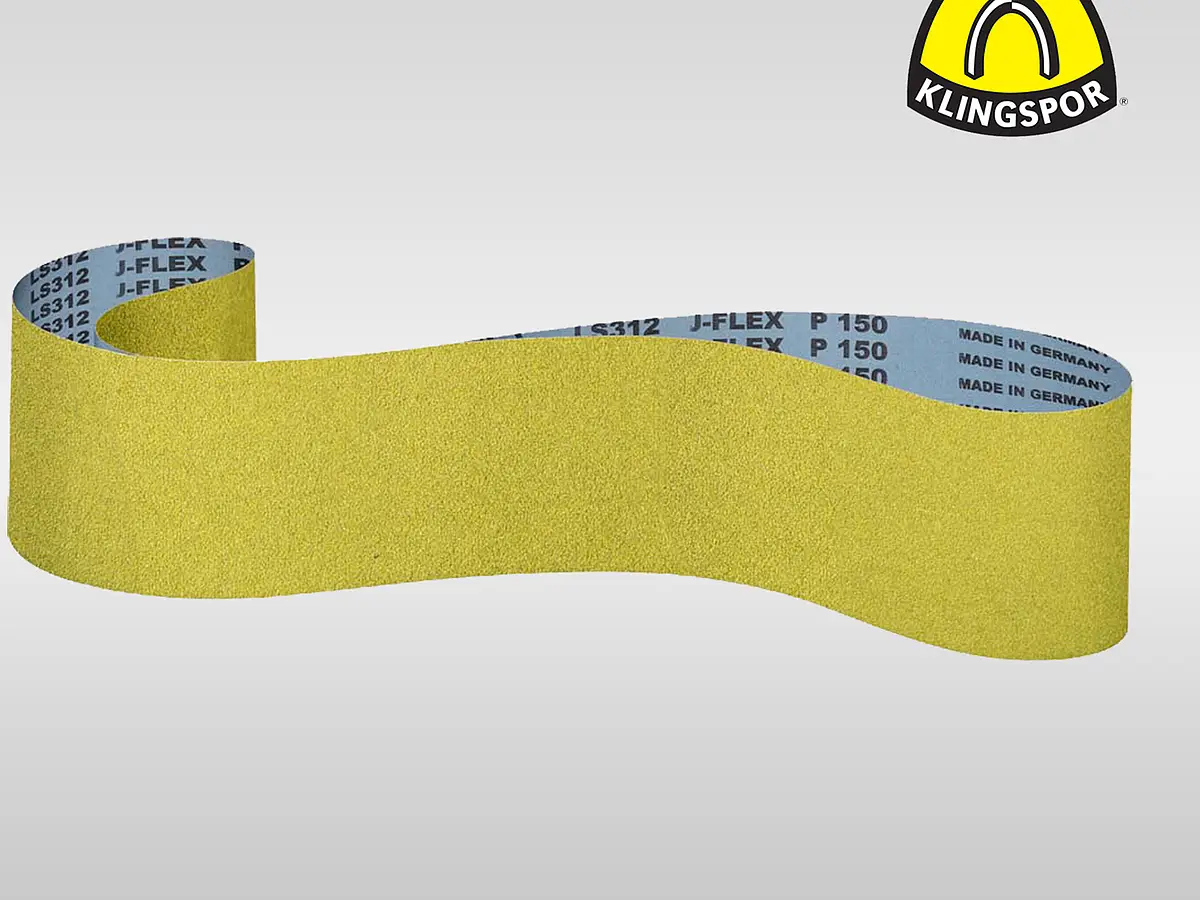
Klingspor Abrasive Belts for Metal, Wood and Contours
Whether you work on a metal surface, a contoured component or wood, the right Klingspor abrasive belt depends on the material, its initial condition, the required finish and the machine. Compare abrasive grain, backing and belt dimensions; Krückemeyer GmbH will help you assess a suitable version.
01
Selection criteria
What does the abrasive belt need to achieve?
Start with the workpiece material, its geometry and the surface you want to achieve. A flexible backing may suit radii and contours, while a firmer cloth or polyester backing may suit demanding surface work. Then decide whether material removal, a consistent finish or reduced clogging matters most. Grain type, coating, grit, bond, belt dimensions and the existing machine must work together; the belt you currently use is a starting point for the assessment.
02
KLINGSPOR ABRASIVE BELTS
Klingspor Abrasive Belts in the Range
The product listing shows Klingspor abrasive belts in different versions. Product data covers backing, grain type, grit, dimensions and joint type, among other details; check these specifications against your application.
No products found
No products are currently listed in this category. Request a call back and we will help you find the right product.
Request a callback03
CHOOSE BY APPLICATION
Assess Grain, Backing and Finish Together
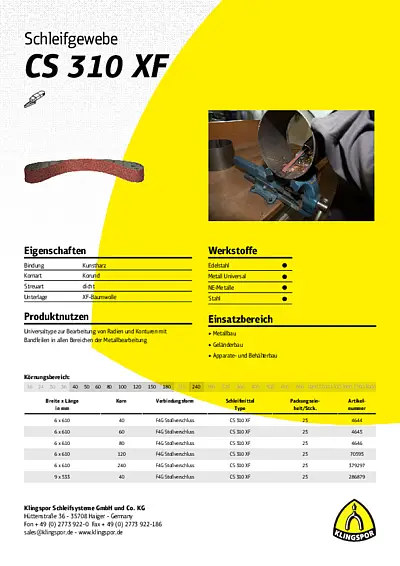
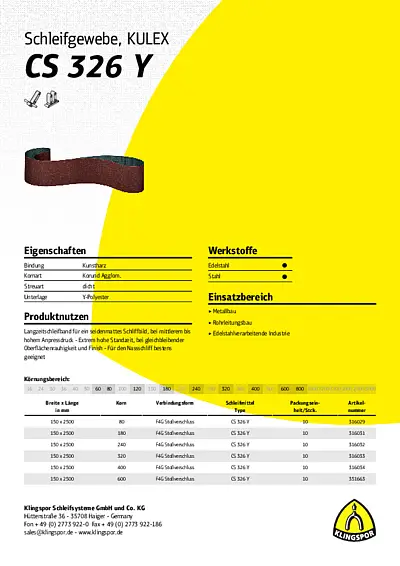
For contoured metal parts, Klingspor describes CS 310 XF with aluminium oxide on flexible XF cotton for belt files. CS 411 Y uses zirconia alumina on tear resistant Y polyester for coarse grinding and deburring steel and stainless steel. CS 326 Y uses aluminium oxide agglomerates on Y polyester to produce a consistent surface finish; the product version is described for wet grinding. These belts serve different tasks. The required removal rate, finish, applied pressure and suitability for your machine determine the choice.
For an enquiry, also check belt width, belt length, grit and joint type. Krückemeyer GmbH converts suitable coated abrasives into abrasive belts; material, dimensions and joint are assessed for the specific application. Tell us which belt you currently use and what you want to improve, such as service life, contour conformity or the grinding pattern.
04
KLINGSPOR PRODUCT DATA
05
USING KLINGSPOR ABRASIVE BELTS
How do I choose between flexible cloth and polyester backing?
Workpiece geometry and operating load guide the choice. Klingspor describes the XF cotton backing of CS 310 XF as flexible for radii and contours worked with belt files. The Y polyester backing of CS 411 Y is designed for high tear resistance in coarse grinding and deburring. Also check the material, machine, belt dimensions and required finish; backing alone does not determine whether a belt is suitable.
Which Klingspor abrasive belt is suitable for deburring steel and stainless steel?
According to Klingspor, CS 411 Y is a zirconia alumina abrasive belt on Y polyester for coarse grinding and deburring steel and stainless steel. Whether it suits your workpiece also depends on its initial condition and geometry, the amount of material to remove and the machine available. A more flexible backing may be useful for contours, but the specific product version needs to be checked.
When does an abrasive belt with agglomerated grain make sense?
It can be an option when a consistent grinding pattern throughout use matters. Klingspor describes CS 326 Y with aluminium oxide agglomerates on Y polyester for an even finish and wet grinding. As the abrasive wears, fresh grain portions become available. Check whether the material, applied pressure, machine and required finish suit this specific version.
What information does Krückemeyer need for a converted abrasive belt?
Give us the starting material or belt currently used, the workpiece material and shape, the machine, belt width and belt length, and the result you need. Grit, grain type, backing and the required joint type also matter if already specified. Krückemeyer GmbH converts suitable coated abrasives into abrasive belts and assesses feasibility against material, dimensions and application.
06
Request advice
Describe the material, workpiece, machine and abrasive belt you currently use. We will help you assess grain, backing, belt dimensions and joint for the result you need.
Choose a Klingspor Belt for Your Application
Tell us about the grinding task and the finish you need. We will assess a suitable version and the possible belt conversion.

ABRASIVES ADVICE
Jürgen Müller
Contact for products
Jürgen Müller can advise you on abrasive belt selection, dimensions and suitable conversion.